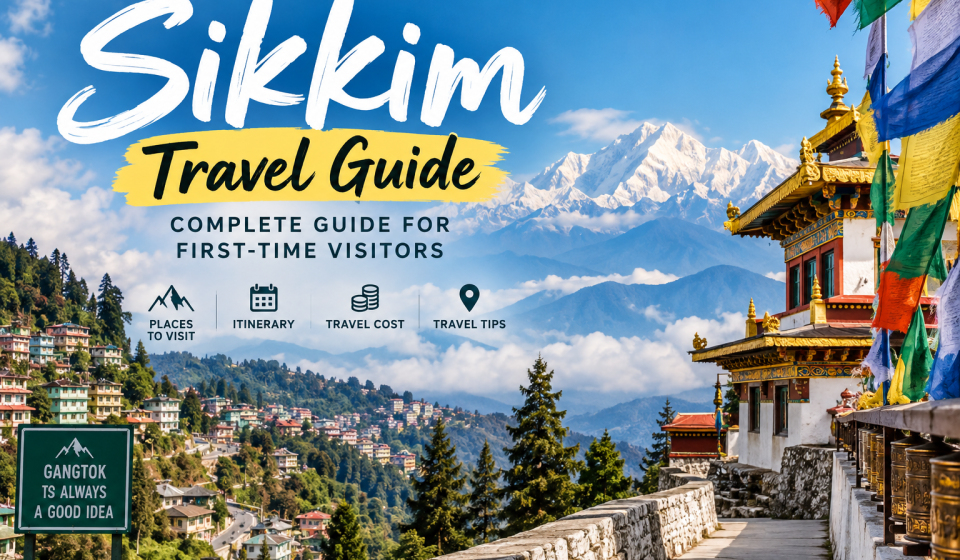

Sikkim is one of those places where the road becomes part of the trip.
You leave the plains around Siliguri, climb through forests and steep bends, and eventually find yourself looking across a Himalayan valley with prayer flags snapping in the wind. Then there’s Gangtok, with its cafés and MG Marg, followed by monasteries, tea gardens, alpine lakes and roads that seem to disappear into the clouds.
For a first trip, 7 to 9 days is a good amount of time. You can see Gangtok, Tsomgo Lake, Nathula, Pelling, Ravangla and North Sikkim without turning every day into a race.
Here’s how I’d plan it.
Where is Sikkim?
Sikkim is a small Himalayan state in northeastern India, bordered by Nepal, Bhutan, West Bengal and Tibet.
Gangtok is the capital and the usual base for first-time visitors. The state is home to Kanchenjunga, which Sikkim Tourism identifies as the highest peak in India and the third-highest mountain in the world. Much of the state sits within the Eastern Himalayas, so you get big changes in scenery as you gain altitude.
The easiest way to think about a Sikkim trip is by region:
- East Sikkim: Gangtok, Tsomgo Lake, Nathula
- North Sikkim: Lachung, Yumthang, Yumesamdong, Lachen
- West Sikkim: Pelling, Yuksom, Pemayangtse
- South Sikkim: Namchi, Ravangla, Temi
You can combine them, but trying to cover everything in one short trip gets tiring quickly.
Best time to visit Sikkim
Sikkim works throughout much of the year, but the experience changes with the season.
March to May
Spring is one of my favourite periods for a Sikkim trip.
The weather is comfortable in lower areas, rhododendrons start appearing in the hills, and the higher valleys begin opening up as winter loosens its grip.
This is a good period for Gangtok, Pelling, Ravangla and Yumthang.
October to November
If your priority is mountain views, October and November are hard to beat.
The monsoon has usually cleared, skies can be sharp and blue, and Kanchenjunga has a much better chance of appearing in full view.
Carry warm clothes. Temperatures drop quickly once you’re at higher elevations.
December to February
Winter is for snow.
Gangtok itself doesn’t guarantee snowfall, but higher places such as Tsomgo Lake, Nathula and parts of North Sikkim can become heavily snow-covered.
Road conditions can change quickly, so don’t build a tightly packed itinerary around a single high-altitude destination.
June to September
This is the monsoon period.
Rain can bring landslides and road closures, particularly on mountain routes. If you travel during these months, keep your schedule flexible and check road and permit conditions before heading into North Sikkim.
How to reach Sikkim
For most travellers, the journey starts in Siliguri or Bagdogra.
By air
Pakyong Airport is Sikkim’s own airport and is located in Pakyong district. Flight schedules can be limited, so Bagdogra remains a practical option for many travellers.
From Bagdogra, you can hire a taxi or take other road transport towards Gangtok.
By train
The nearest major railway station is New Jalpaiguri (NJP) in West Bengal.
From NJP, you can continue by taxi or shared vehicle to Gangtok.
A road journey from NJP or Bagdogra to Gangtok generally takes several hours, depending on traffic, weather and road conditions.
By road
This is the route most people end up taking.
The drive follows the Himalayan foothills and then climbs towards Gangtok. Shared taxis are cheaper, while private taxis give you more control over stops and timing.
If you’re coming from Guwahati or other parts of Northeast India, you can also build Sikkim into a longer Northeast road trip.
How many days do you need for Sikkim?
I’d keep it simple.
5 days: Gangtok and one additional destination.
7 days: Gangtok + North Sikkim or West/South Sikkim.
9 days: Gangtok + North Sikkim + Pelling/Ravangla.
10 to 12 days: A slower trip covering Gangtok, North Sikkim, Pelling and South Sikkim.
For a first visit, 7 to 9 days hits the sweet spot.
You get enough time for mountain drives without spending half the holiday inside a taxi.
Best places to visit in Sikkim
1. Gangtok
Start here.
Gangtok is the easiest place to settle into Sikkim. Spend a day walking around MG Marg, visiting monasteries and viewpoints, and eating local food before heading into the higher mountains.
Popular places around Gangtok include:
- MG Marg
- Tashi View Point
- Ganesh Tok
- Hanuman Tok
- Rumtek Monastery
- Namgyal Institute of Tibetology
- Banjhakri Falls
The city also works as your base for East Sikkim excursions.
2. Tsomgo Lake
Tsomgo Lake, also called Changu Lake, sits at roughly 12,400 feet.
The lake changes character with the seasons. In winter, it can freeze. During warmer months, the surrounding landscape becomes greener and flowers appear around the higher slopes.
The lake is a protected-area destination, so you’ll need the relevant permit before travelling there. Foreign visitors have separate requirements and must use registered travel arrangements.
3. Nathula Pass
Nathula is one of Sikkim’s most popular high-altitude excursions from Gangtok.
It’s on the India-China border and sits at more than 14,000 feet. The road passes through some spectacular mountain terrain before reaching the border area.
There are restrictions here. Foreign tourists aren’t permitted to visit Nathula, while Indian visitors need a permit arranged through a registered travel agency.
Don’t treat Nathula like an ordinary sightseeing stop. The altitude is serious, and the weather can turn cold very quickly.
4. Lachung
Lachung is a mountain town in North Sikkim and a common base for trips towards Yumthang and Yumesamdong.
The journey itself is a big part of the experience. Rivers, waterfalls, forests and steep mountain walls keep appearing around the bends.
Current Sikkim Tourism rules require tourists visiting Lachung to follow a 3-day/2-night itinerary, with permits issued at least a day in advance. Same-day permits aren’t issued under the current advisory.
Check the latest permit and road situation before booking anything.
5. Yumthang Valley
Yumthang is often called the Valley of Flowers.
Spring is particularly beautiful here, when alpine flowers begin appearing across the valley.
The landscape is wide and open, with mountains surrounding the valley and the Teesta’s tributaries running through the region.
It gets very cold, even when Gangtok feels comfortable. Pack accordingly.
6. Yumesamdong, Zero Point
Yumesamdong is popularly called Zero Point and lies farther into North Sikkim.
Snow is the big attraction here.
Road and weather conditions matter more than your itinerary on a high-altitude day like this. Your driver and local travel agency should confirm whether the route is open before you leave Lachung.
7. Pelling
Pelling is the place I’d choose when you want mountain views without spending every day at extreme altitude.
It’s in West Sikkim and is known for views of Kanchenjunga, monasteries and forested mountain scenery.
Visit:
- Pemayangtse Monastery
- Rabdentse Ruins
- Skywalk
- Khecheopalri Lake
- Singshore Bridge
Stay at least 2 nights if you can.
8. Ravangla
Ravangla sits in South Sikkim and has become popular for its mountain views and the huge Buddha statue at Buddha Park.
The town is quieter than Gangtok.
It’s a good stop between South and West Sikkim, especially if you prefer smaller hill towns.
9. Temi Tea Garden
Temi is Sikkim’s famous tea-growing area.
The roads wind through green slopes and tea plantations, and the views make it an easy stop on a South Sikkim itinerary.
Buy some local tea while you’re there. It’s one of the more useful Sikkim souvenirs you can take home.
10. Yuksom
Yuksom has serious historical importance in Sikkim.
It was the site where the first Chogyal of Sikkim was consecrated in 1642. It’s also an important starting point for treks towards the Khangchendzonga region.
If you enjoy history, monasteries and trekking, give Yuksom more time than a quick photo stop.
A practical 8-day Sikkim itinerary
Day 1: Bagdogra/NJP to Gangtok
Arrive and drive to Gangtok.
Keep the evening easy. Walk around MG Marg, have dinner and get some rest.
Day 2: Gangtok sightseeing
Visit Tashi View Point, Ganesh Tok, Hanuman Tok and Rumtek Monastery.
Spend the evening around MG Marg.
Day 3: Tsomgo Lake + Nathula
Start early.
Visit Tsomgo Lake and Nathula if permits and weather allow. Add Baba Harbhajan Singh Memorial if it’s included in your permitted route.
Return to Gangtok by evening.
Day 4: Gangtok to Lachung
This is a long mountain drive.
Leave early and keep the day mostly for the journey. Stay overnight in Lachung.
Day 5: Yumthang + Yumesamdong
Leave early for Yumthang and continue towards Yumesamdong if the road is open.
Return to Lachung.
Day 6: Lachung to Gangtok
Drive back towards Gangtok.
Depending on road conditions and your travel plan, you can either stay in Gangtok or continue towards South/West Sikkim.
Day 7: Gangtok to Pelling
Drive towards Pelling.
Visit Pemayangtse Monastery and Rabdentse if you have enough daylight.
Day 8: Pelling to NJP/Bagdogra
Start early for the return journey.
If your flight or train is late in the evening, leave plenty of buffer time. Mountain roads don’t care about your departure schedule.
Sikkim permits: what first-time visitors should know
This is where planning matters.
Several destinations in Sikkim fall under protected or restricted areas. The permit rules vary depending on the destination, nationality and vehicle.
Sikkim Tourism’s current Protected Area Permit page lists destinations such as Tsomgo, Nathula, Yumthang, Yumesamdong, Thangu and Gurudongmar, with different requirements for Indian and foreign visitors.
For many restricted destinations, you’ll deal with a registered Sikkim Tourism travel agency.
For Nathula, foreign nationals aren’t permitted. Foreign visitors can visit Tsomgo Lake subject to the applicable permit and group requirements.
Carry original identification and the documents requested for your particular permit.
And check the rules close to your travel date. Mountain routes and government permissions can change.
How much does a Sikkim trip cost?
Your biggest expenses will usually be transport, accommodation and sightseeing vehicles.
For a rough budget, I’d plan around:
| Travel style | Approx. budget per person |
|---|---|
| Budget | ₹15,000 to ₹22,000 |
| Comfortable | ₹22,000 to ₹35,000 |
| Premium | ₹40,000+ |
These are broad planning numbers for a multi-day trip and can move considerably with season, hotel choice, group size and transport.
North Sikkim trips cost more because of the distance, permits and vehicle arrangements.
Travelling as a group can reduce the per-person transport cost substantially.
What to eat in Sikkim
Try the local food.
Momos are the obvious starting point, but don’t stop there.
Try:
- Thukpa
- Phagshapa
- Sha phalley
- Gundruk
- Chhurpi
- Kinema
- Sikkimese-style noodles
- Local tea
You’ll find plenty of Tibetan, Nepali and Indian food around Gangtok.
MG Marg is an easy place to start if you want several choices within walking distance.
What to pack for Sikkim
Your packing list depends heavily on where you’re going.
For Gangtok and lower-altitude areas:
- Light jacket
- Comfortable shoes
- Umbrella or rain jacket
- Sunglasses
- Sunscreen
- Basic medicines
For North Sikkim, Tsomgo and Nathula:
- Warm thermal layers
- Gloves
- Woollen socks
- Heavy jacket
- Waterproof shoes
- Sunglasses
- Sunscreen
- Lip balm
- Power bank
Layering works better than carrying one enormous jacket.
And keep some space in your bag for the clothes you won’t need once you descend.
Is Sikkim safe for first-time visitors?
Yes, but mountain travel needs common sense.
Roads can be narrow, steep and affected by rain, landslides or snowfall. Follow local advice when a route is closed.
High altitude is another thing to respect. Tsomgo and Nathula are far higher than Gangtok, and North Sikkim takes you even higher.
If you feel seriously unwell at altitude, tell your driver or guide immediately and don’t try to tough it out.
Keep emergency contacts, identification and travel documents with you.
Sikkim travel tips that will save you trouble
Start drives early. Mountain journeys take longer than Google Maps might suggest.
Keep buffer days. A road closure can wreck a tightly packed itinerary.
Book registered local operators for restricted areas. Permit requirements are destination-specific.
Carry cash. Digital payments work in many places, but connectivity can disappear in remote areas.
Don’t rely on mobile data everywhere. Signal can be patchy once you leave major towns.
Respect photography restrictions. Border areas and military installations aren’t places to casually point your camera.
Don’t litter. Carry your waste back with you when you’re travelling through remote areas.
Take the altitude seriously. The jump from Gangtok to places like Nathula or Tsomgo is substantial.
Don’t judge distances by the map. A 60-km Himalayan drive can take much longer than a 60-km drive on a normal highway.
Is Sikkim worth visiting?
Absolutely.
Sikkim gives you a rare mix of mountain roads, Buddhist monasteries, small towns, high-altitude lakes, tea gardens and huge Himalayan views inside a relatively small state.
For your first trip, I’d spend 3 nights around Gangtok, 2 nights in North Sikkim and 2 nights in Pelling or South Sikkim.
Keep the itinerary loose. Leave room for weather, road conditions and those random roadside views that make you ask the driver to stop.
That’s often where the best part of the trip happens.
Useful official resource
Before travelling, check the latest rules, permits and advisories on the Government of Sikkim Tourism website. The department currently publishes protected-area permit information and destination-specific requirements online.
Sikkim Tourism, Government of Sikkim
Featured Image Credit: Generated/Sourced via Chatgpt.com.
Editorial note: Some articles may use AI-assisted research or drafting. Our editorial process includes human review and editing, and important travel information should be verified with official sources before your trip.
Travel Tips & Responsible Exploration
Good travel planning starts with staying informed. Before your journey, verify important details such as transportation, accommodation, weather, permits, entry requirements, and local guidelines. Respect local communities, cultures, traditions, and the environment, and travel responsibly wherever you go. Suman Rabha shares practical travel guides, local insights, and destination information to help readers explore Northeast India and beyond with greater confidence.