
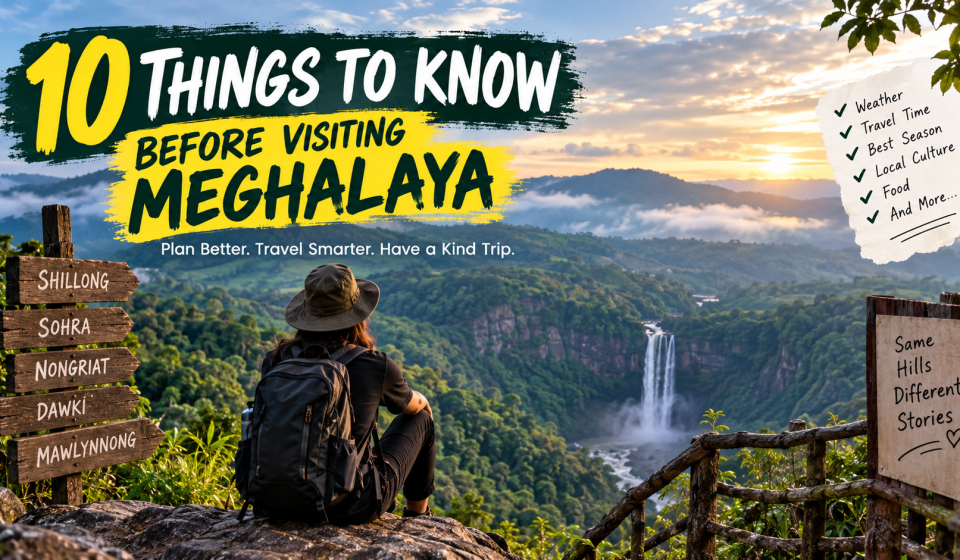

Meghalaya looks easy on a map. A few hill towns, waterfalls, caves, living root bridges, done.
Then you get there and realize the roads are slow, the weather has opinions, and that waterfall you saw on Instagram might involve a 2-hour trek.
Here are 10 things I’d know before planning the trip.
1. Meghalaya takes longer to get around than you expect
Distances can look tiny on Google Maps. The hills have other plans.
A 60 km drive can take several hours because of winding roads, traffic, road conditions, and stops. If you’re planning Shillong, Cherrapunji, Mawlynnong, Dawki and Nongriat in the same trip, build your itinerary around travel time, not kilometres.
Trying to squeeze too many places into 3 or 4 days usually makes the trip feel like a road trip where you spend half your holiday inside a car.
2. The weather can change quickly
Meghalaya gets a lot of rain, especially around Sohra, formerly known as Cherrapunji.
You can leave Shillong under clear skies and reach Sohra with rain coming sideways. Then 30 minutes later, the sky opens up again.
Carry a light rain jacket, waterproof footwear and something to protect your phone. An umbrella is useful too, although wind and heavy rain can turn an umbrella into modern art.
3. Pick your travel season based on what you want to see
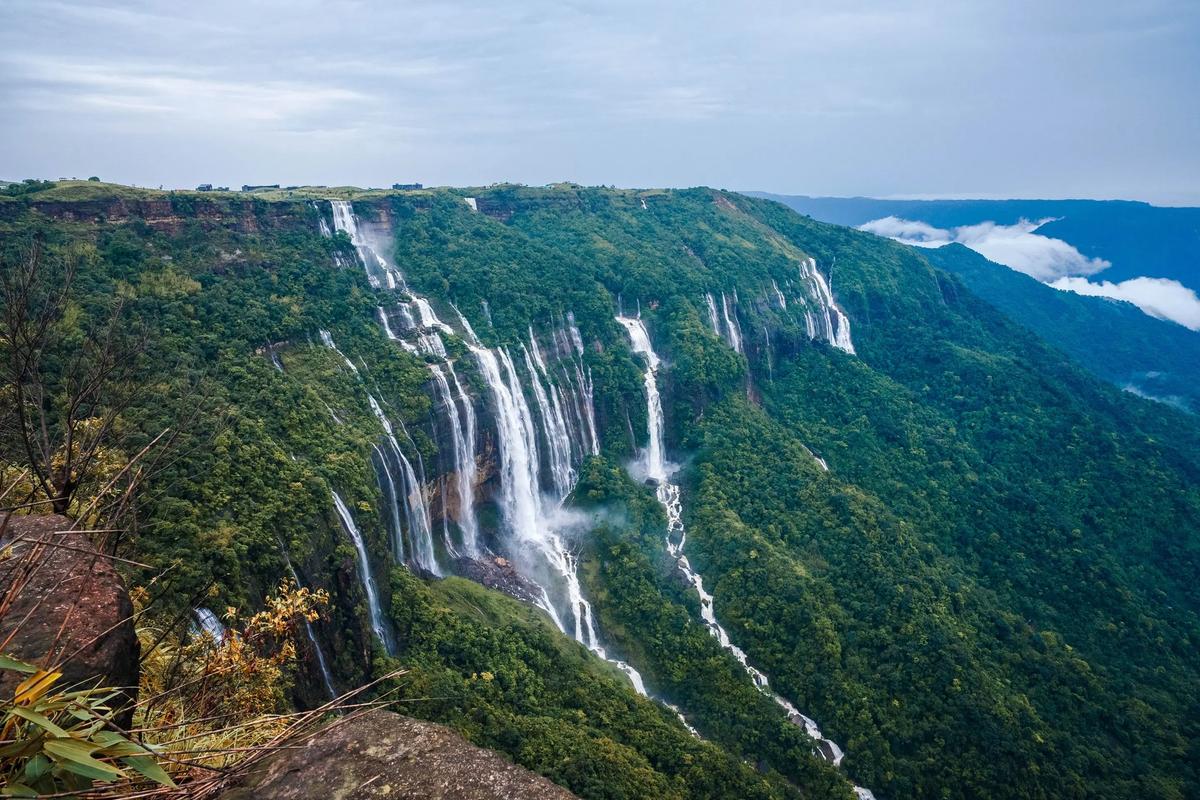
The monsoon gives Meghalaya its famous green scenery and huge waterfalls. Around Sohra, the landscape can look absolutely wild during the rainy months.
But heavy rain can also mean slippery trails, poor visibility and changes to road or trekking conditions.
For comfortable sightseeing, October to April is generally easier. For dramatic waterfalls and that soaked-in-green Meghalaya look, the monsoon is the obvious choice.
Your priorities decide the timing.
4. Shillong isn’t the whole Meghalaya trip
Shillong is usually the easiest starting point, and it’s worth spending time there.
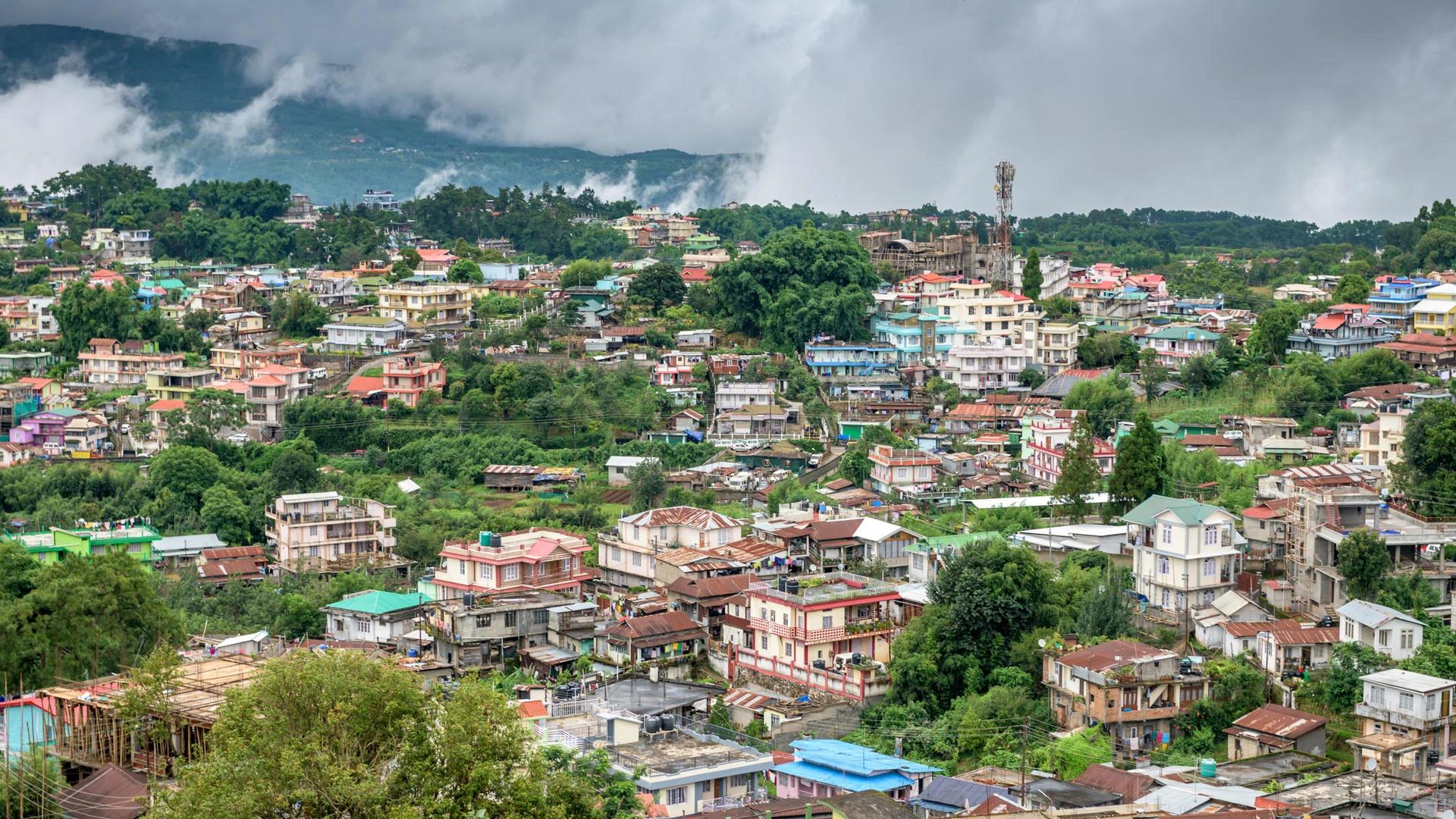
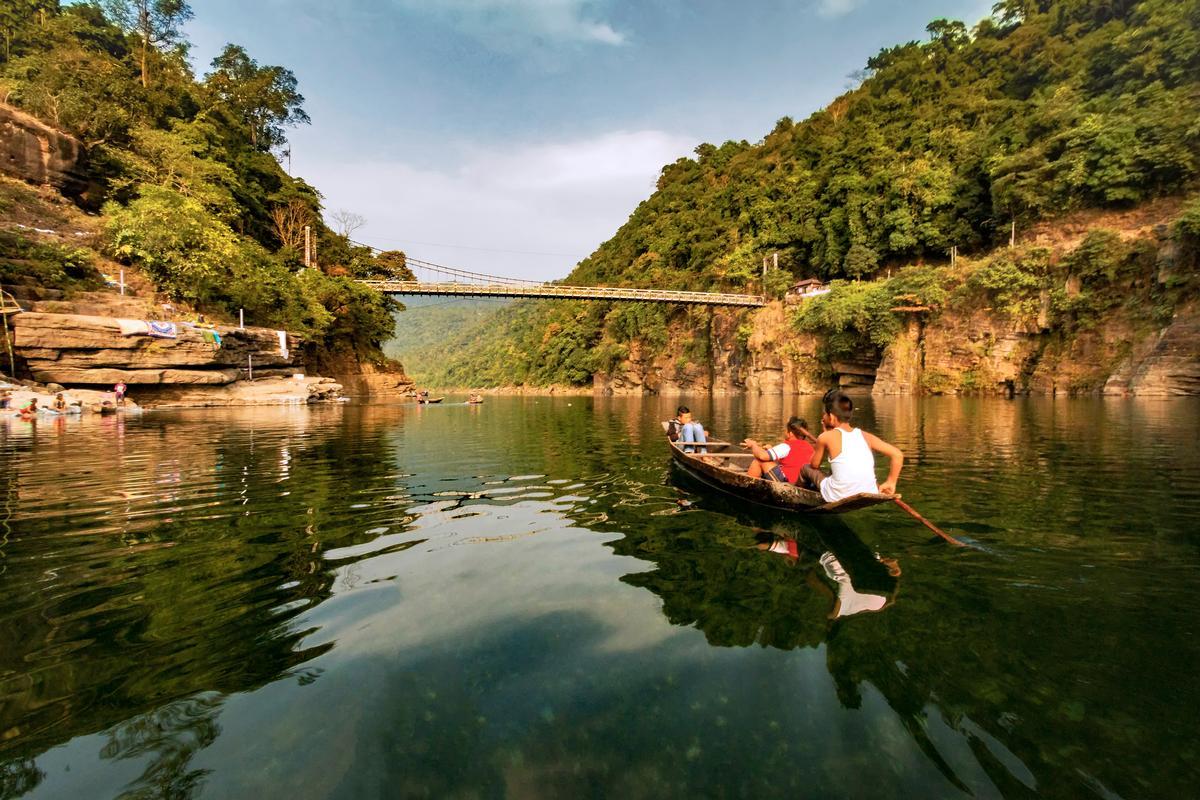
But the really memorable parts of a Meghalaya trip often happen outside the city. Sohra’s waterfalls and caves, Nongriat’s living root bridge, Dawki’s river and the quieter villages give you a very different experience.
So give Shillong enough time, then get out into the hills.
5. Some of the best places require your legs
Meghalaya has plenty of viewpoints where you can step out of a car, take a photo and leave.
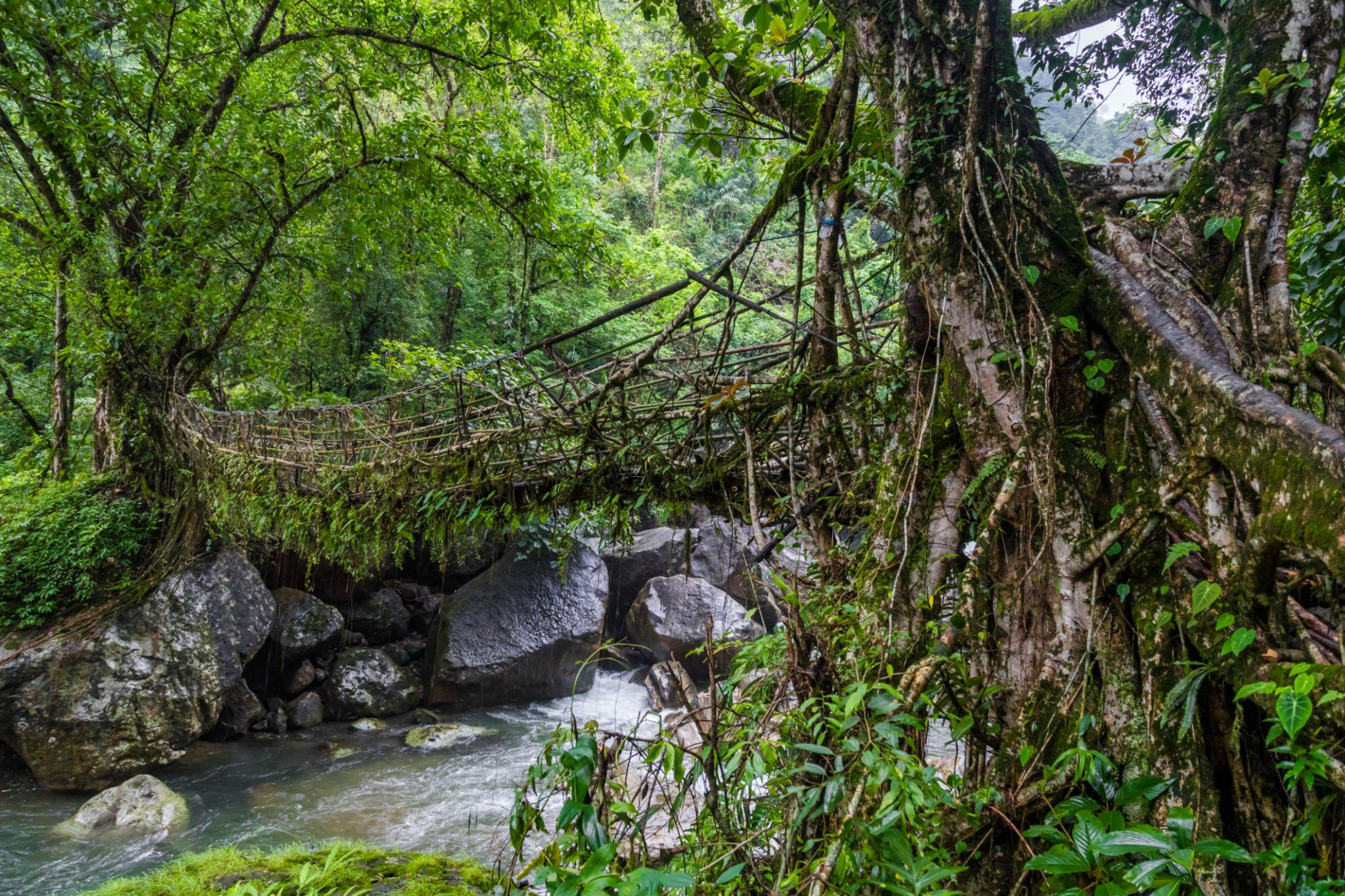
Then there are places like Nongriat.
Getting to the famous Double Decker Living Root Bridge means climbing hundreds of steps through forest. Your legs will have an opinion about this.
Wear proper shoes, carry water and start early if you’re doing a longer trek. And don’t plan a packed sightseeing schedule for the same day unless you enjoy negotiating with your knees.
6. Cash still matters
You’ll find ATMs and digital payments in larger towns, but connectivity and payment availability can vary once you’re travelling through smaller places.
Keep some cash with you for local transport, food, entry fees and small shops.
I’d carry enough for at least a day or two rather than assuming every roadside café has a QR code waiting for you.
7. Don’t expect perfect mobile connectivity everywhere
Shillong has decent connectivity in many areas. Remote villages, trekking routes and parts of the countryside are another story.
Your phone might show full bars one moment and become a very expensive camera the next.
Download offline maps before heading into remote areas. Tell someone your plans if you’re doing a long trek, and don’t depend entirely on mobile data for navigation.
8. Respect local rules and village customs
Meghalaya has many communities with their own customs and traditions. Some villages and natural sites have local rules about photography, waste, parking, alcohol, trekking routes or access.
Follow signs and listen to local guides.
And please don’t leave plastic bottles, snack packets or other rubbish on trekking trails. Carry your waste back with you. The forest doesn’t need your biscuit wrapper.
9. Food can be different from what you expect
Meghalaya’s food has its own identity, and pork is common in Khasi, Jaintia and Garo cuisine.
Try local dishes if you eat pork and meat. Jadoh, a rice-and-meat dish, is one of the better-known Khasi foods. Smoked meats, tungrymbai and local preparations of rice are also worth trying.
Vegetarian travellers can find food too, especially in Shillong, but options become more limited in smaller villages.
If you have specific dietary requirements, plan ahead.
10. Give Meghalaya more days than you think
This is probably the biggest planning mistake.
You can technically see a lot of Meghalaya in 4 or 5 days. You’ll also spend a lot of that time driving.
For a first trip, 6 to 8 days gives you room for Shillong, Sohra, Nongriat, Dawki and a couple of quieter stops without turning every morning into a race against the clock.
And leave some empty space in the itinerary.
You might find a roadside viewpoint, a tiny café, a village road disappearing into the hills, or a waterfall that wasn’t even on your original list. Those random stops are often the bits you’ll remember.
Featured Image Credit: Generated/Sourced via Chatgpt.com.
Editorial note: Some articles may use AI-assisted research or drafting. Our editorial process includes human review and editing, and important travel information should be verified with official sources before your trip.
Travel Tips & Responsible Exploration
Good travel planning starts with staying informed. Before your journey, verify important details such as transportation, accommodation, weather, permits, entry requirements, and local guidelines. Respect local communities, cultures, traditions, and the environment, and travel responsibly wherever you go. Suman Rabha shares practical travel guides, local insights, and destination information to help readers explore Northeast India and beyond with greater confidence.