
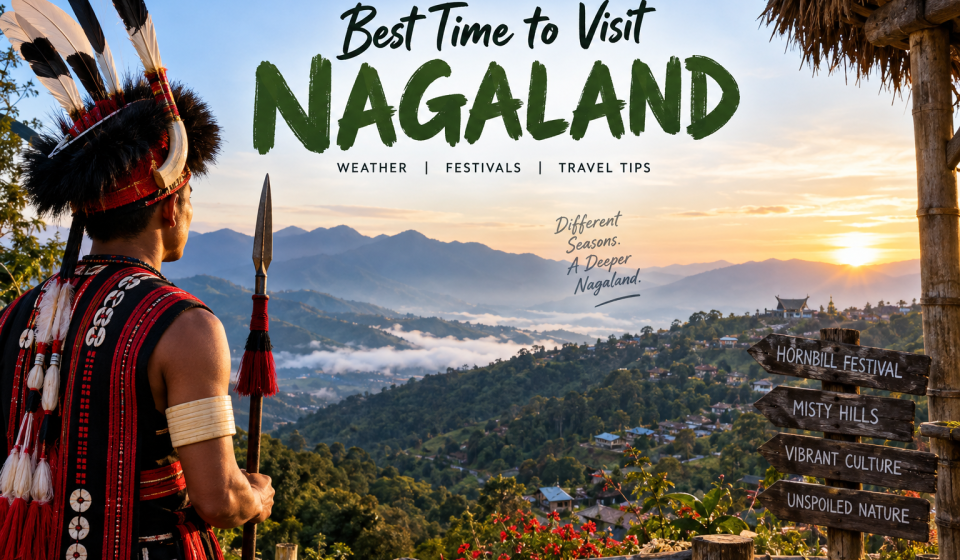

Nagaland changes personality with the seasons.
Winter brings clear mountain views and the Hornbill Festival. Summer turns the hills greener. Monsoon paints everything in deep shades of green, but heavy rain can make road travel slow and unpredictable.
If you’re planning your first trip, October to May is the safest window, with December being especially good for festivals and pleasant weather.
October to November: cool weather and clear views
October is when Nagaland starts drying out after the monsoon.
The hills are green, the air gets cooler, and roads become easier for long drives. This is a good time for places such as Kohima, Khonoma, Mokokchung and Dzüko Valley.
November feels properly autumnal in the hills. Days are comfortable for walking, while evenings can get chilly.
If you like photography, this period is hard to beat. You get mountain roads, village life and misty mornings without dealing with the heaviest monsoon rain.
December: the best month for festivals
December is when Nagaland gets busy.
The Hornbill Festival, held at Kisama near Kohima, usually runs from December 1 to 10. Naga communities come together to present traditional dances, music, food, crafts and cultural performances.
If the festival is your main reason for visiting, book accommodation early. Kohima gets noticeably busier during these 10 days.
December also gives you crisp mornings and excellent visibility across the hills. Pack a proper jacket for the evenings.
January to February: cold, quiet and beautiful
January is one of the coldest months in Nagaland.
Kohima can feel quite chilly, especially after sunset. Higher areas are colder, so bring warm layers if you’re heading towards Dzüko Valley or spending time in hill villages.
The upside is the weather. Skies are generally clearer, humidity is low and long road journeys are more comfortable.
February starts feeling a little softer. Flowers begin appearing in some areas, and the days are pleasant for sightseeing.
For travellers who prefer quiet roads and fewer crowds, January and February are excellent.
March to April: spring in the hills
Spring is a lovely time to travel through Nagaland.
Temperatures rise, forests start filling out with fresh greenery, and the countryside feels alive after winter.
April is particularly good for village visits and walking. You can spend the morning exploring Kohima and still have comfortable weather for an afternoon drive into the surrounding hills.
This is also a good period if you’re interested in trekking. Conditions can vary by trail, though, so check locally before setting out.
May: warm, green and increasingly wet
May sits on the edge of the monsoon.
The landscape becomes intensely green, and temperatures are warmer. Rain can arrive suddenly, especially later in the month.
Early May can still work well for a trip. By the latter half, I’d keep the itinerary flexible because road conditions can change quickly after heavy rain.
June to September: monsoon season
This is the wettest part of the year.
Nagaland receives heavy rainfall, and landslides or poor road conditions can affect travel between towns and villages. A scenic 3-hour drive can turn into a much longer day when rain hits the hills.
Still, monsoon has its own appeal.
The forests are thick, waterfalls become fuller, and the hills look incredibly green. If you’re comfortable with rain and don’t mind changing plans, you can have a memorable trip.
I’d just avoid building a tightly packed road itinerary during these months.
So, when should you visit Nagaland?
For most travellers, I’d pick November to April.
Choose December if the Hornbill Festival is the priority.
Choose January or February for cooler weather, clear mountain views and quieter travel.
Choose March or April for spring greenery, comfortable daytime temperatures and outdoor activities.
Choose October or November if you want that sweet spot between fresh post-monsoon landscapes and easier road travel.
Monsoon is for travellers who genuinely enjoy rain. If you’re planning your first Nagaland trip and want predictable conditions, I’d leave June to September for another time.
Best time by travel goal
| What you want | Best months |
|---|---|
| Hornbill Festival | December |
| Clear mountain views | October to April |
| Trekking | October to April |
| Village visits | October to May |
| Cool weather | December to February |
| Spring scenery | March to April |
| Lush green landscapes | May to September |
| Fewer tourists | January to February |
What to pack
Your packing list depends heavily on the month.
For winter, bring a warm jacket, sweater, comfortable shoes and layers. Nights in the hills can get properly cold.
For spring, light clothing with one warm layer is usually enough.
For monsoon, carry a rain jacket, waterproof footwear and a bag cover. Keep electronics protected too. Nagaland rain doesn’t always arrive politely.
And bring shoes you can actually walk in. You’ll encounter steep lanes, village paths, uneven roads and plenty of stairs.
My pick
November to April is the overall sweet spot.
If I had to choose a single month, I’d go with December for the mix of cool weather, mountain scenery and the Hornbill Festival.
If festivals aren’t your thing, February or March would be my pick. The pace is calmer, the weather is comfortable, and you get plenty of time to explore beyond Kohima.
Nagaland rewards slow travel. Give yourself room for a long drive, an unexpected village stop or a morning when the mountains disappear into mist. Those are often the days you’ll remember.
Featured Image Credit: Generated/Sourced via Chatgpt.com.
Editorial note: Some articles may use AI-assisted research or drafting. Our editorial process includes human review and editing, and important travel information should be verified with official sources before your trip.
Travel Tips & Responsible Exploration
Good travel planning starts with staying informed. Before your journey, verify important details such as transportation, accommodation, weather, permits, entry requirements, and local guidelines. Respect local communities, cultures, traditions, and the environment, and travel responsibly wherever you go. Suman Rabha shares practical travel guides, local insights, and destination information to help readers explore Northeast India and beyond with greater confidence.