
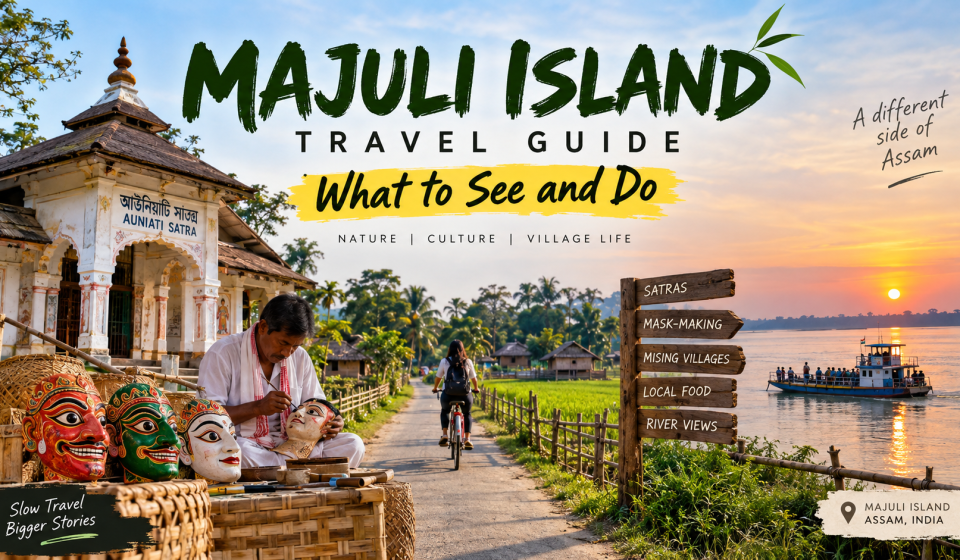

Majuli is the kind of place where your plans start getting looser after the first few hours.
You arrive by ferry, rent a scooter, pass rice fields and bamboo houses, stop at a satra because you saw a sign, and somehow lose half the afternoon talking to someone you just met.
That’s the charm.
Majuli sits in the Brahmaputra in Assam and is known for its Vaishnavite monasteries, mask-making, village life and Mising culture. It’s also a place where the river shapes daily life, including how you get there and where you stay.
If you’re planning a trip, give Majuli 2 days at minimum. Three days feels much better.
How to reach Majuli
The usual route starts from Jorhat.
From Jorhat, travel to Nimati Ghat, where ferries run across the Brahmaputra to Majuli. The crossing takes roughly 1 to 1.5 hours depending on the service and river conditions.
Ferry schedules can change, especially with weather and river conditions, so check locally before setting out.
You can also take your motorcycle or car on services that carry vehicles. If you’re travelling around Majuli by scooter, bringing your own bike can save you the trouble of arranging one after arrival.
Best time to visit Majuli
October to April is the period I’d pick.
The weather is generally more comfortable, roads are easier to travel, and the island feels particularly pleasant during the cooler months.
November is especially interesting if you want to experience Raas Mahotsav, Majuli’s famous festival celebrating the life and teachings of Krishna. The island gets busy during the festival, so book accommodation early.
Monsoon changes the experience completely. Heavy rain and rising water can affect ferry services, roads and travel plans.
1. Visit the satras
This is the first thing I’d put on your Majuli list.
Majuli has long been one of the major centres of Neo-Vaishnavism in Assam, a religious and cultural movement associated with Srimanta Sankardeva and his disciple Madhavdeva.
The island’s satras are monasteries as well as centres of Assamese culture.
Some well-known ones include:
- Auniati Satra
- Kamalabari Satra
- Dakhinpat Satra
- Garamur Satra
- Samaguri Satra
Each has its own character.
Kamalabari is closely associated with Assamese performing arts. Auniati has a long history and important collections. Samaguri is particularly interesting if you’re curious about traditional mask-making.
Give yourself time inside the satras. You don’t need to rush through them like tourist checkpoints.
2. Watch traditional mask-making at Samaguri
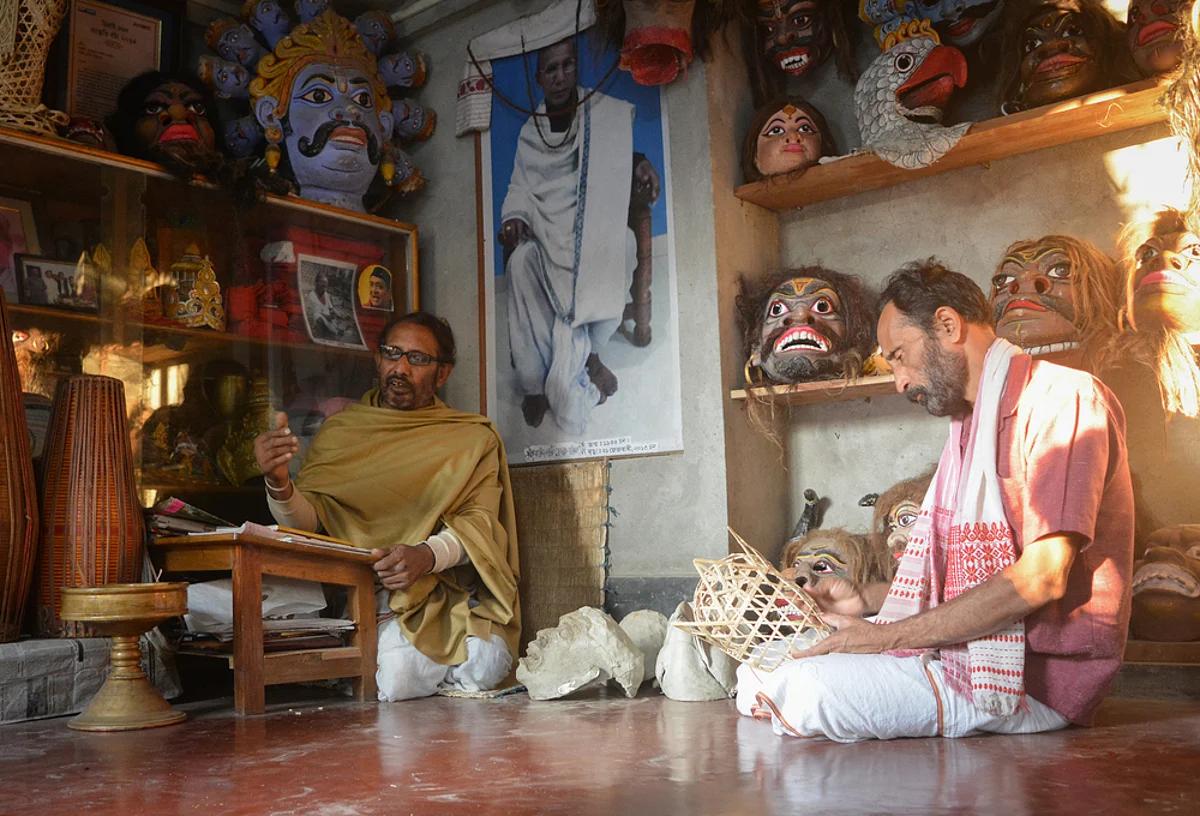
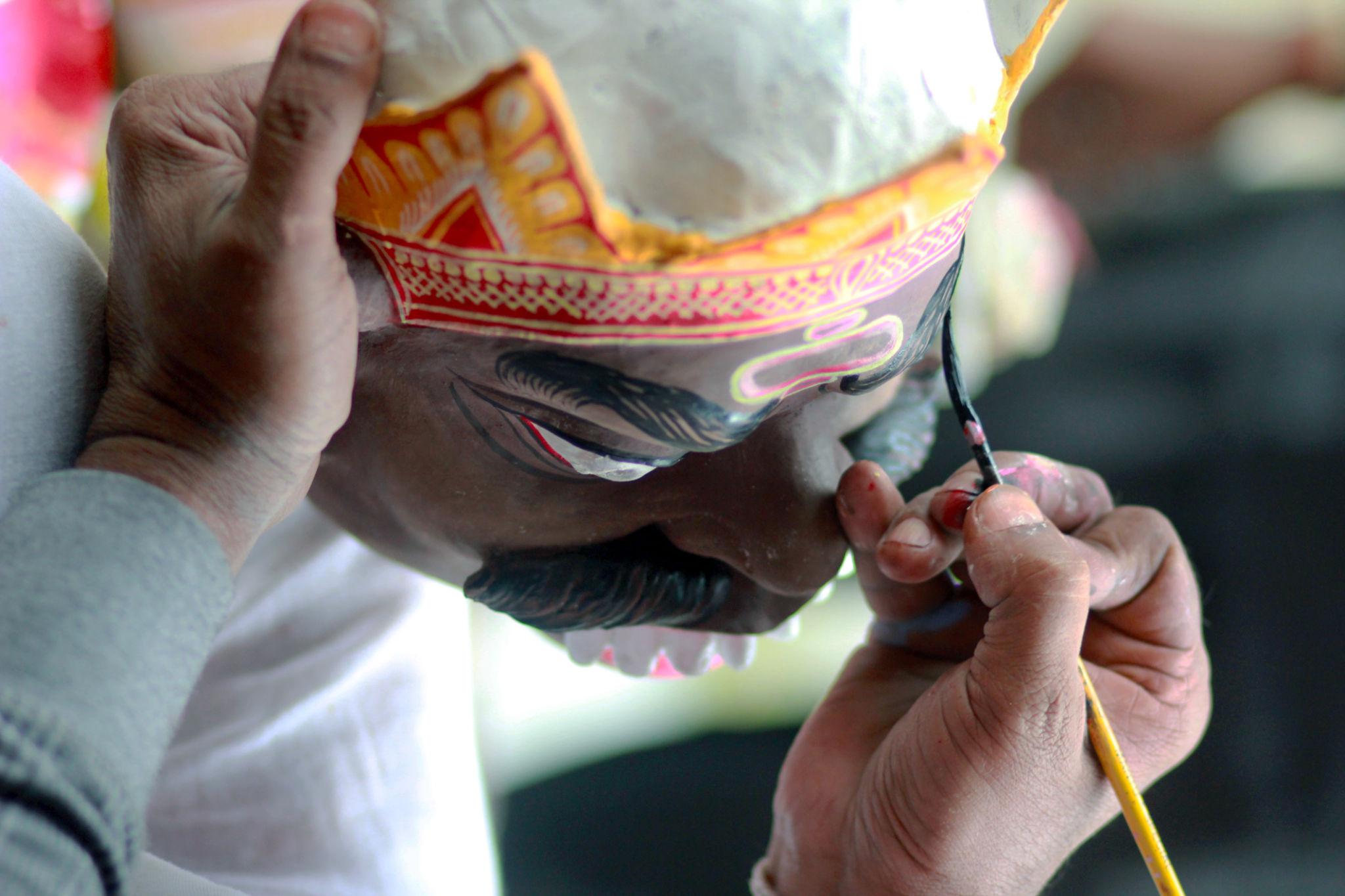
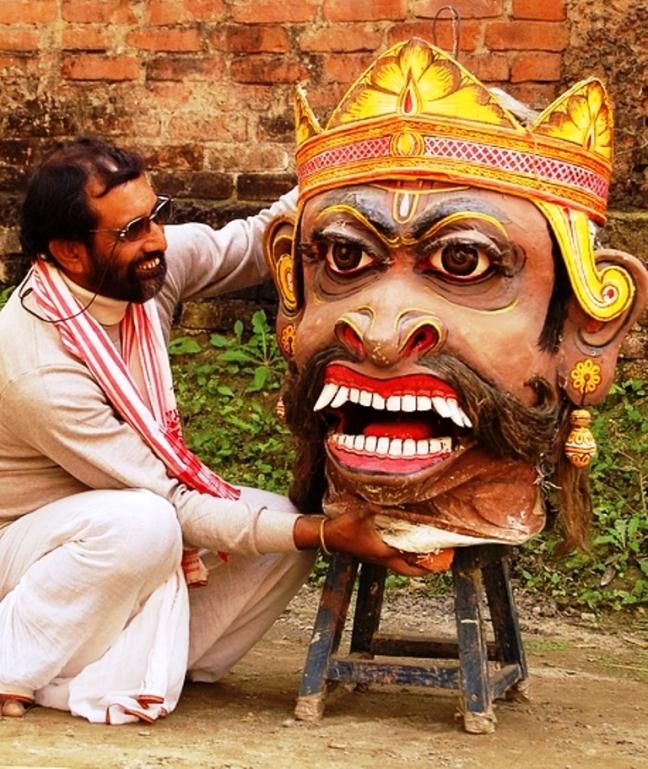
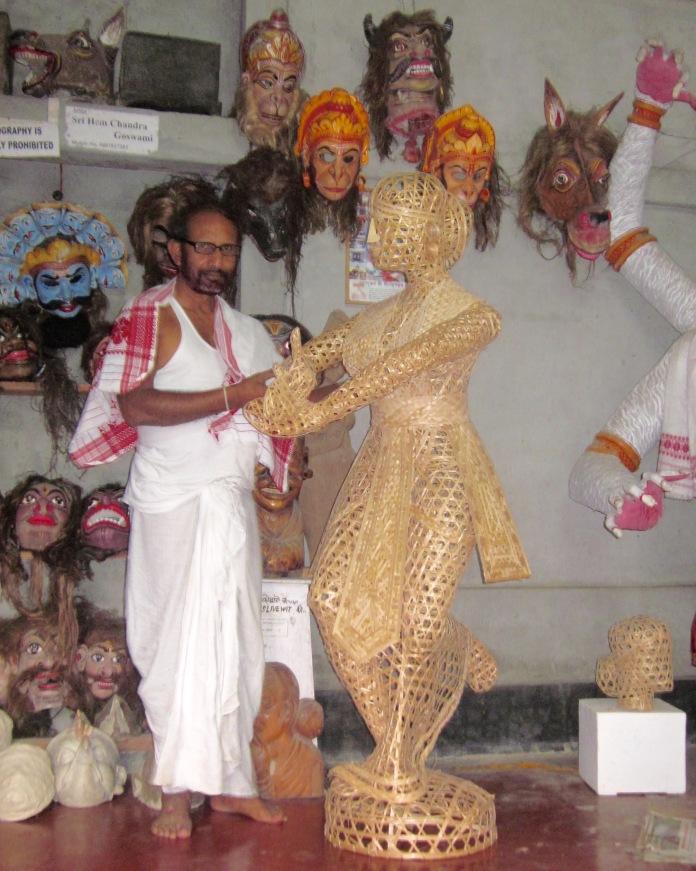
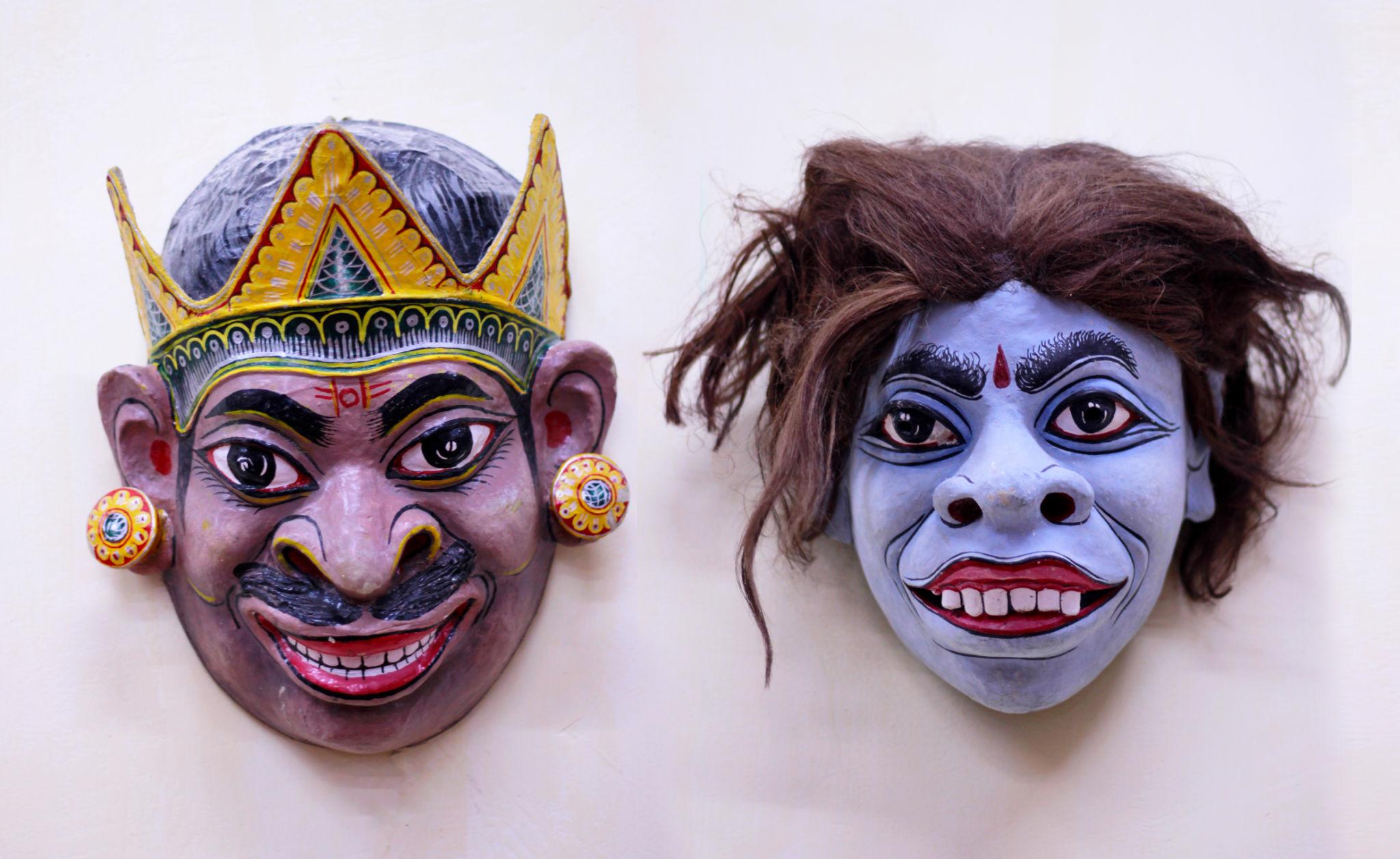
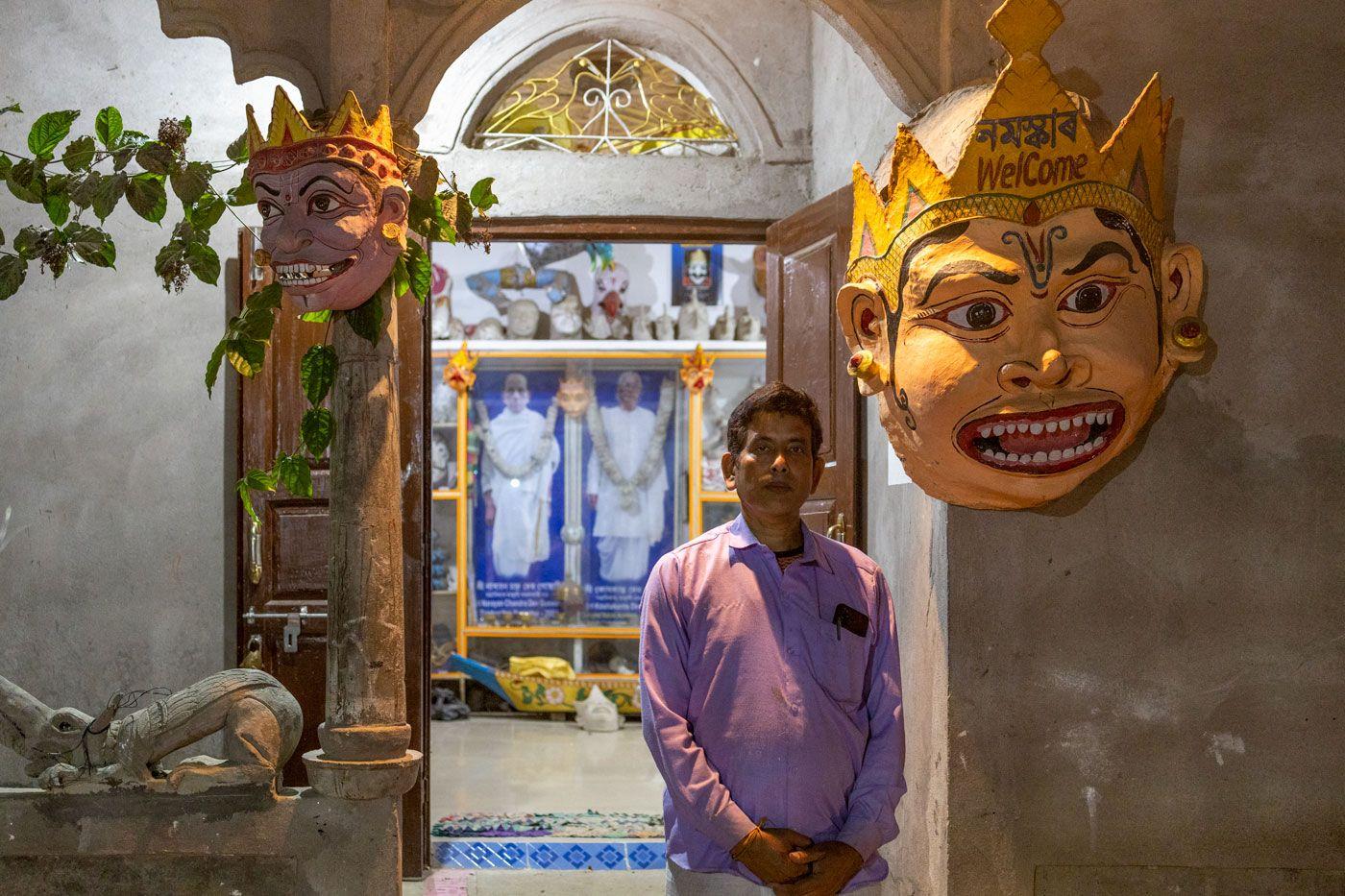
Majuli’s traditional masks are one of its most recognisable crafts.
At Samaguri Satra, artisans make masks from materials such as bamboo, cloth and clay. The masks are used in Bhaona performances, a traditional form of Assamese religious theatre.
You’ll see faces of characters from stories connected to the Ramayana, Mahabharata and Vaishnavite traditions.
Watching an artisan work is much better than simply buying a mask from a shop. You can see how a rough bamboo structure gradually turns into a face.
3. Explore Mising villages
Majuli isn’t only about satras.
The island is home to the Mising community, and visiting the villages gives you a very different view of Majuli.
You’ll see traditional homes, rice fields, handlooms and everyday rural life. Women in many Mising households continue weaving textiles, and you may get a chance to see the process.
If you visit someone’s home, be respectful. Ask before taking photographs.
And if you’re offered food or rice beer, don’t automatically say yes just because it sounds like part of the “experience.” Talk to people first. You’ll learn more that way.
4. Try Mising food
Food is one of the reasons I wouldn’t recommend rushing through Majuli.
Look for local dishes built around rice, fish, vegetables and simple cooking methods.
You may come across:
- Apong, a traditional rice beer
- Fish preparations
- Pork dishes
- Rice served with seasonal vegetables
- Smoked or fermented foods
Apong is made in different ways, and recipes vary between communities.
If you’re staying at a local homestay, ask what’s being cooked that day. That’s usually a better bet than hunting for a restaurant menu.
5. Go cycling or ride a scooter around the island
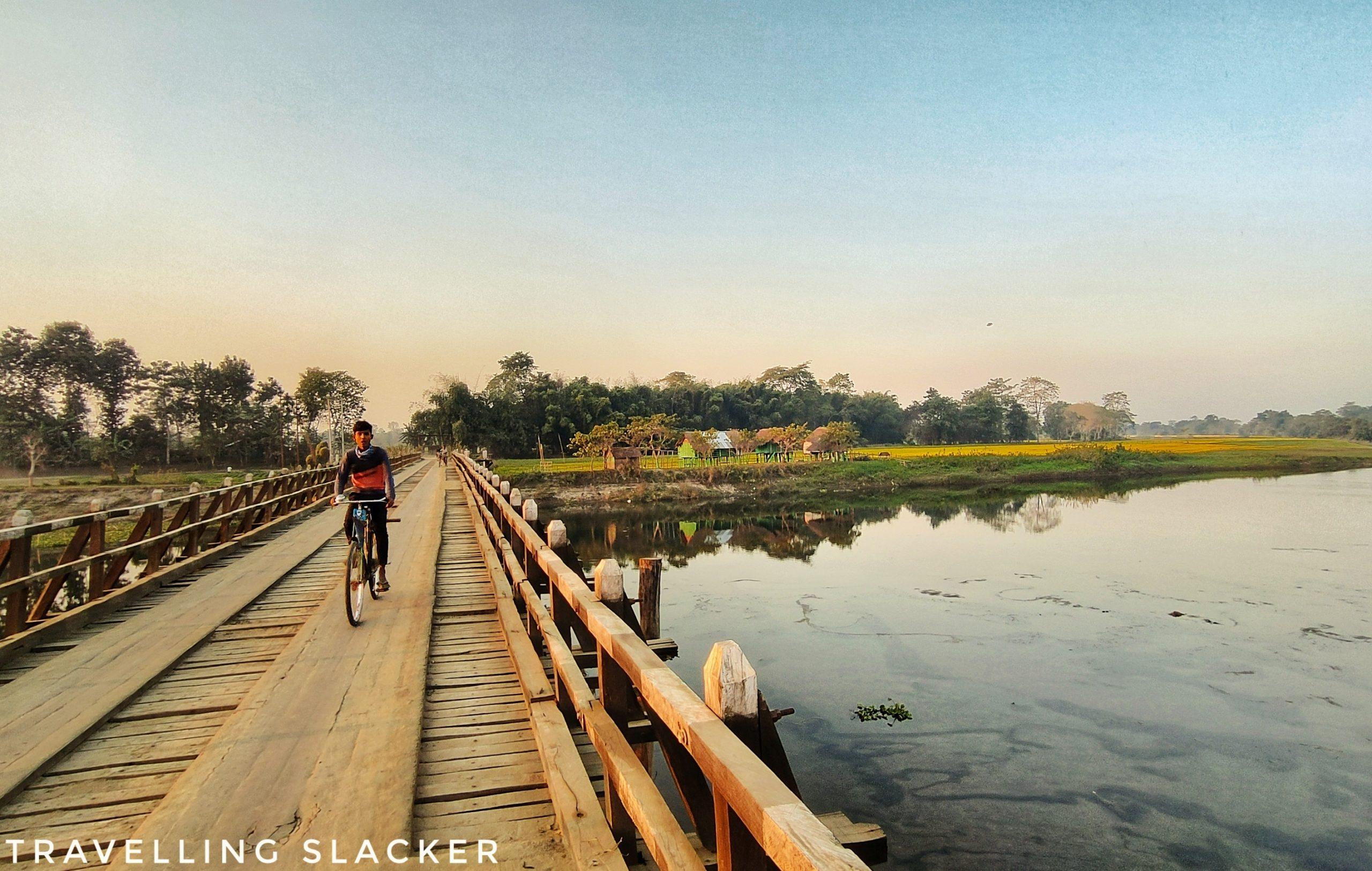
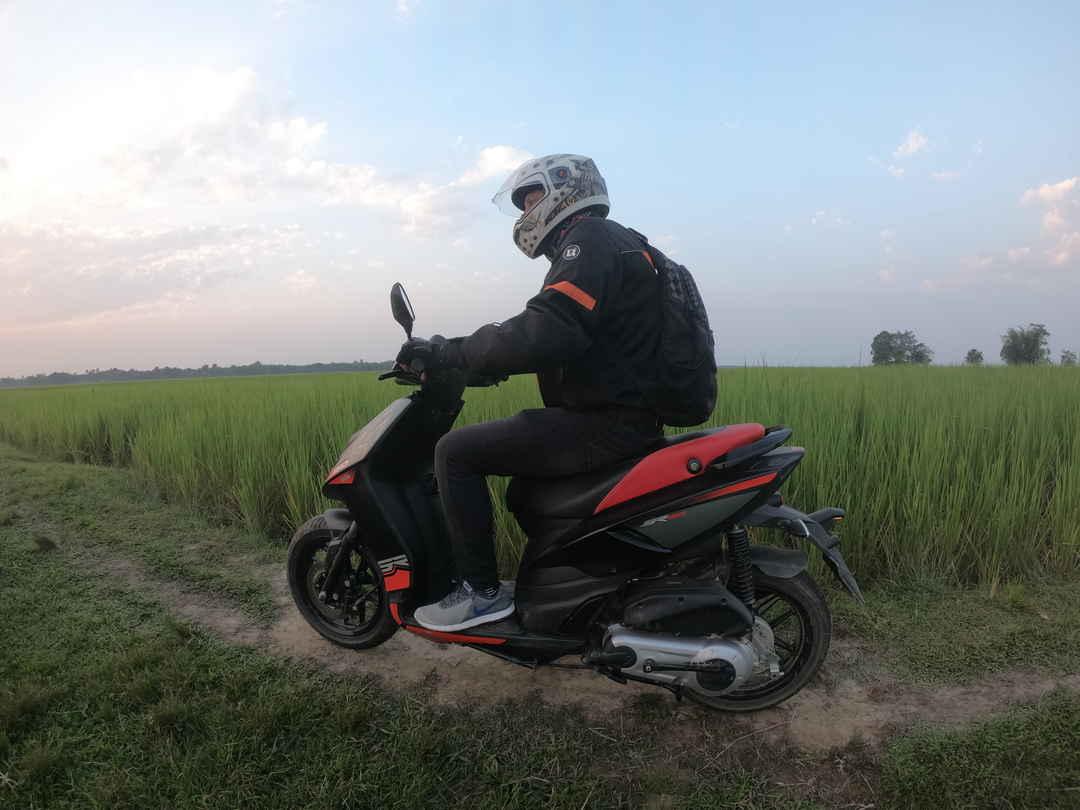
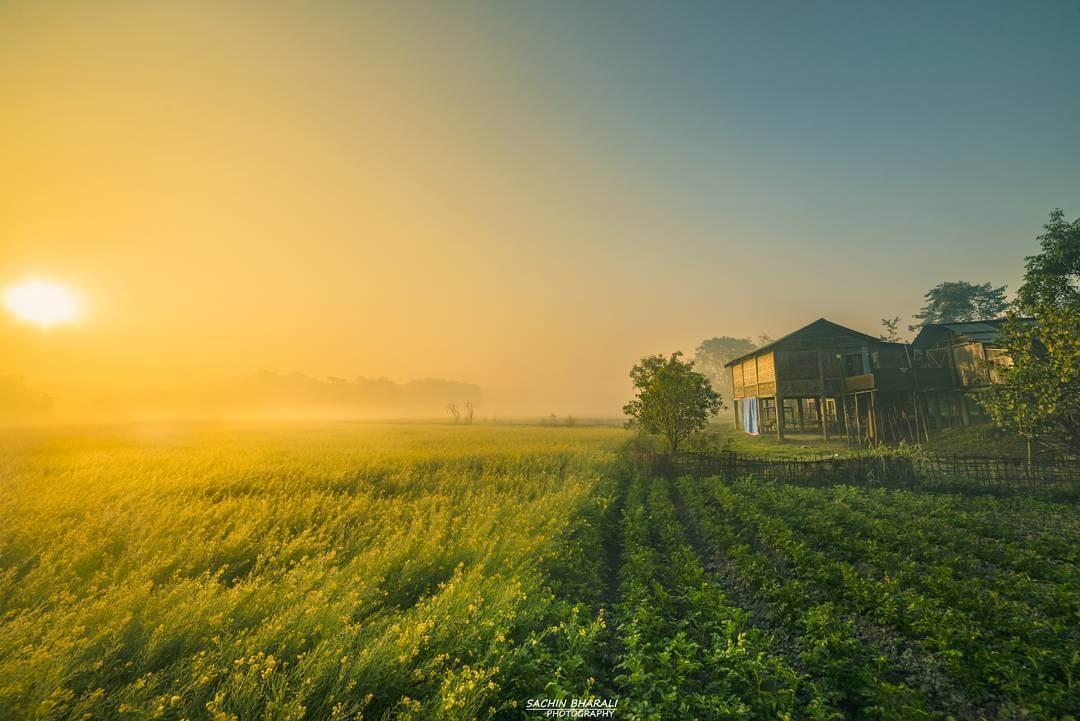
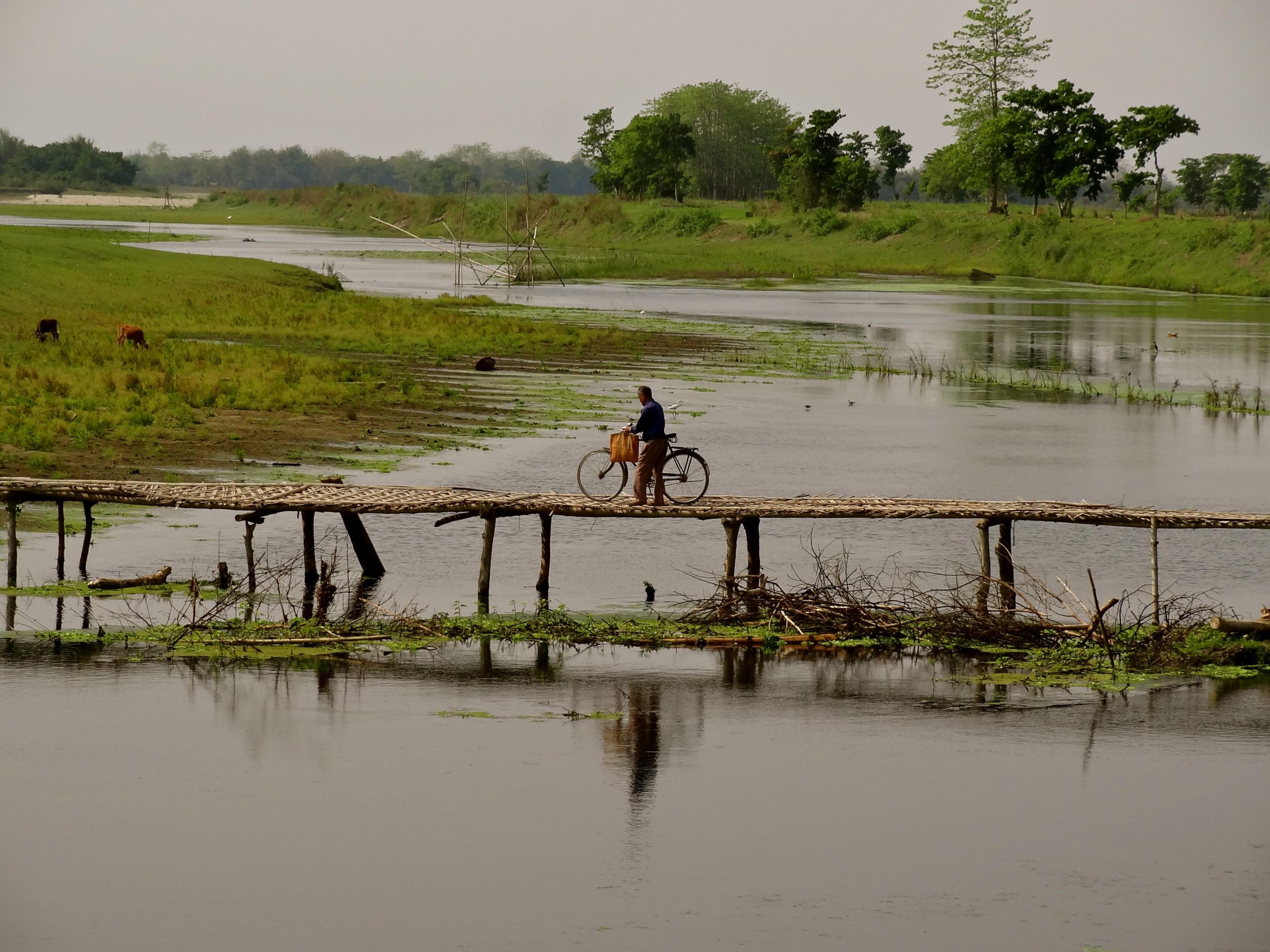
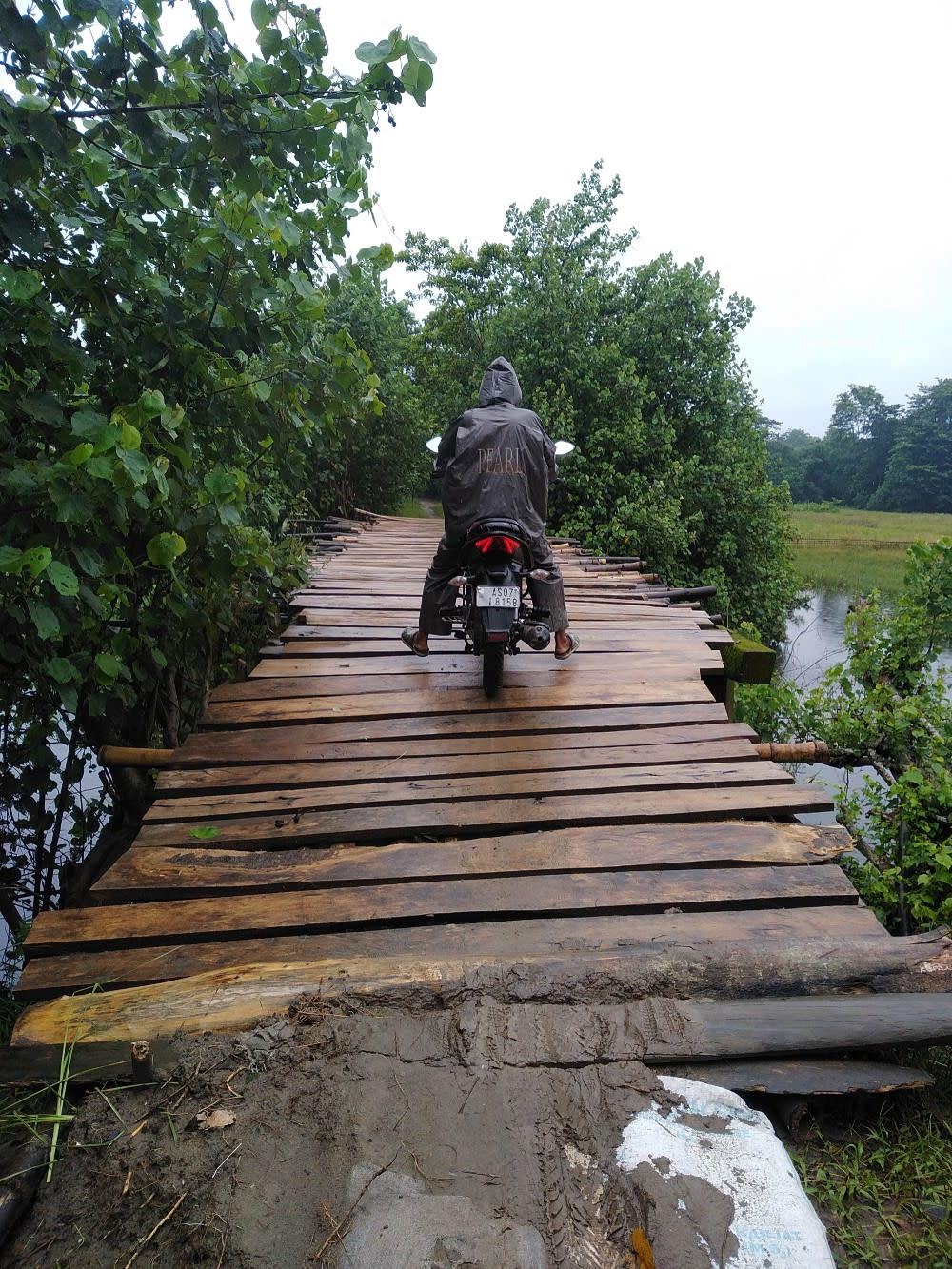
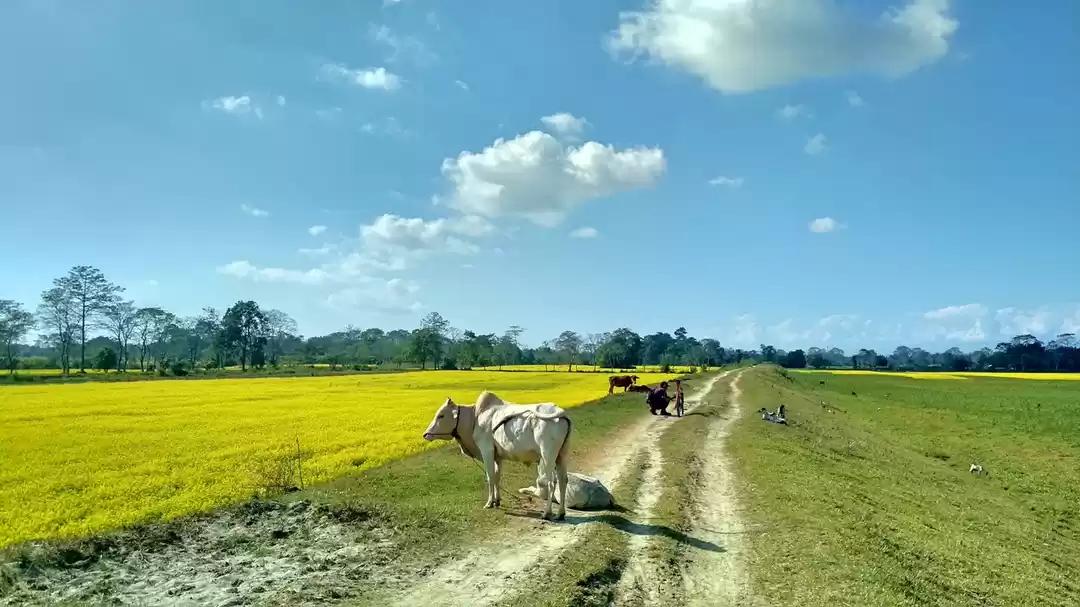
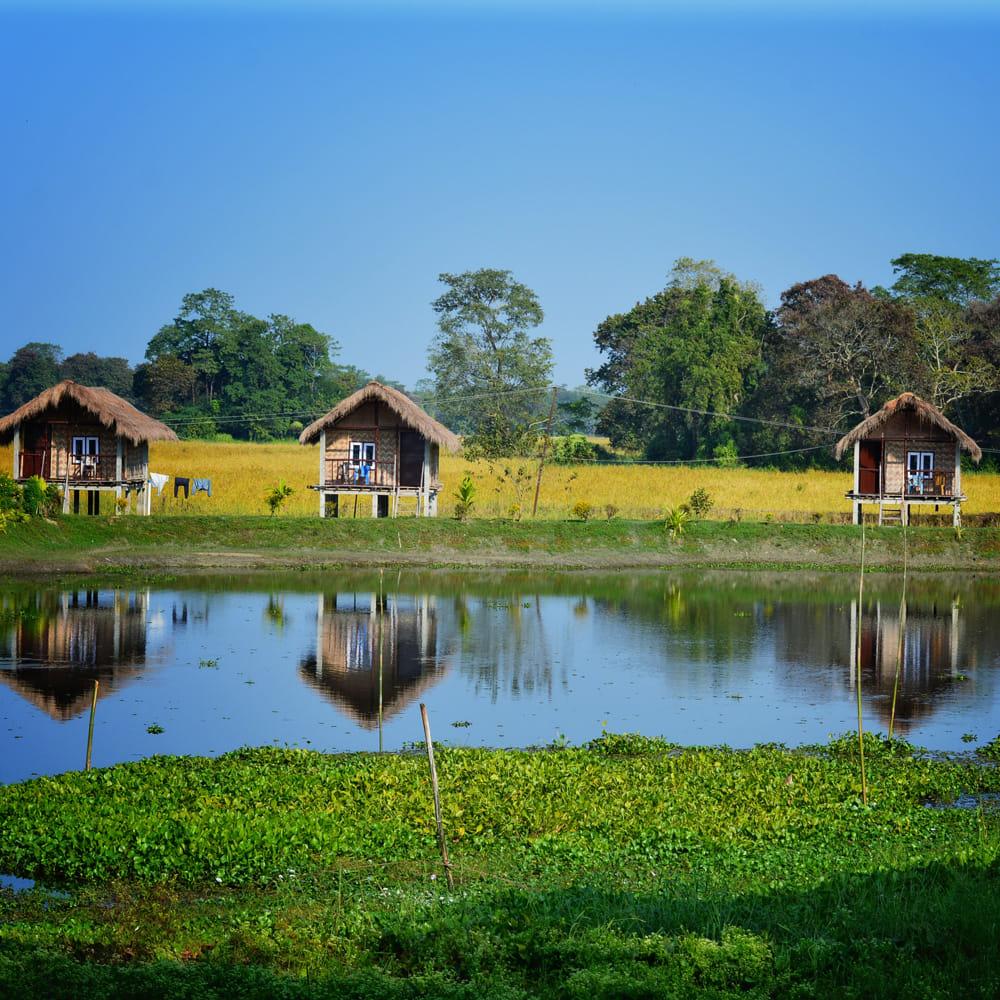
Majuli is made for slow travel.
Rent a scooter if you’re comfortable riding. Otherwise, hire a local auto or use a bicycle for shorter distances.
The roads take you through fields, villages, ponds and small settlements. There’s plenty to see between the places listed on your map.
And that’s exactly the point.
Leave some time with no destination.
6. Catch a sunset by the Brahmaputra
The river is part of Majuli’s identity, so spend at least one evening near the water.
Find a quiet spot, sit down and watch the light change across the river.
Sunsets here aren’t something you need to turn into an activity. Bring a cup of tea, put your phone away for 20 minutes and let the river do the work.
7. Experience Raas Mahotsav
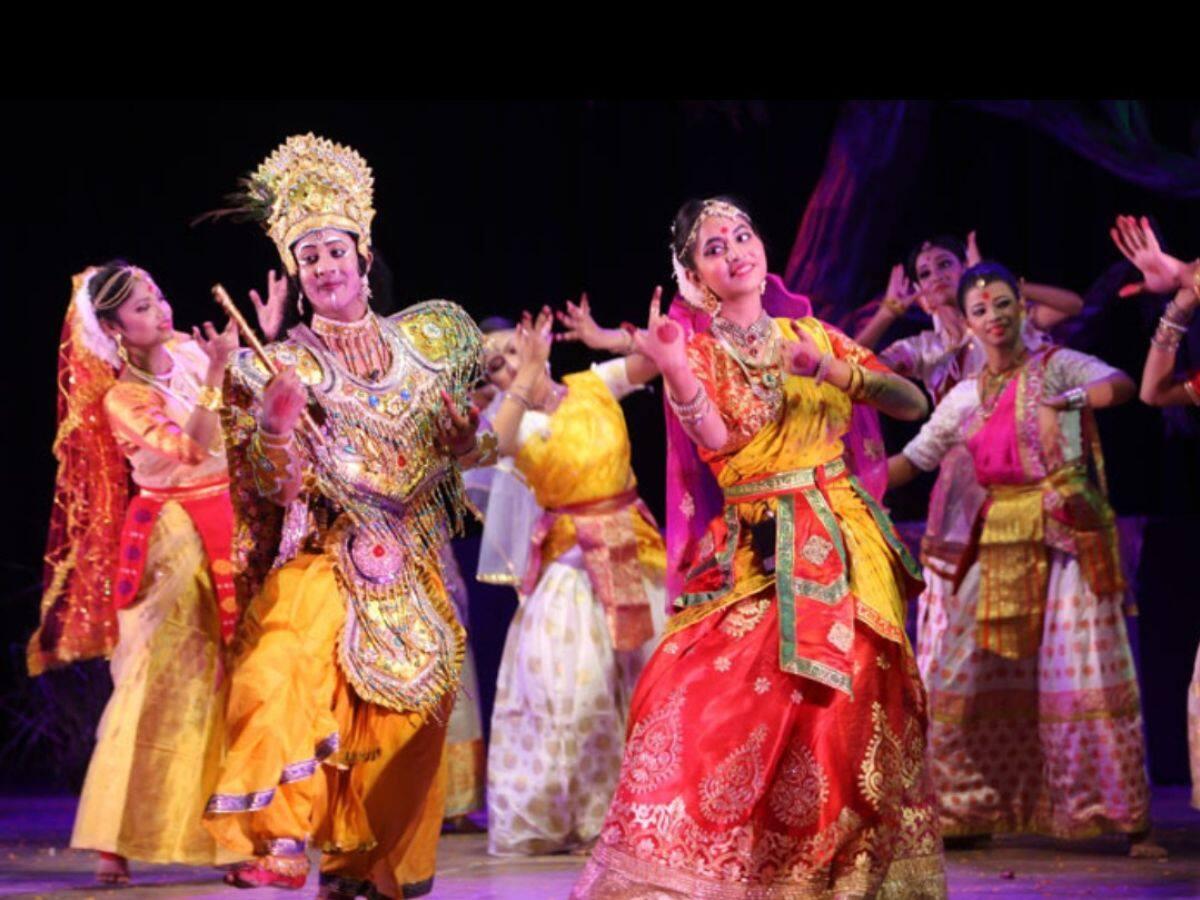
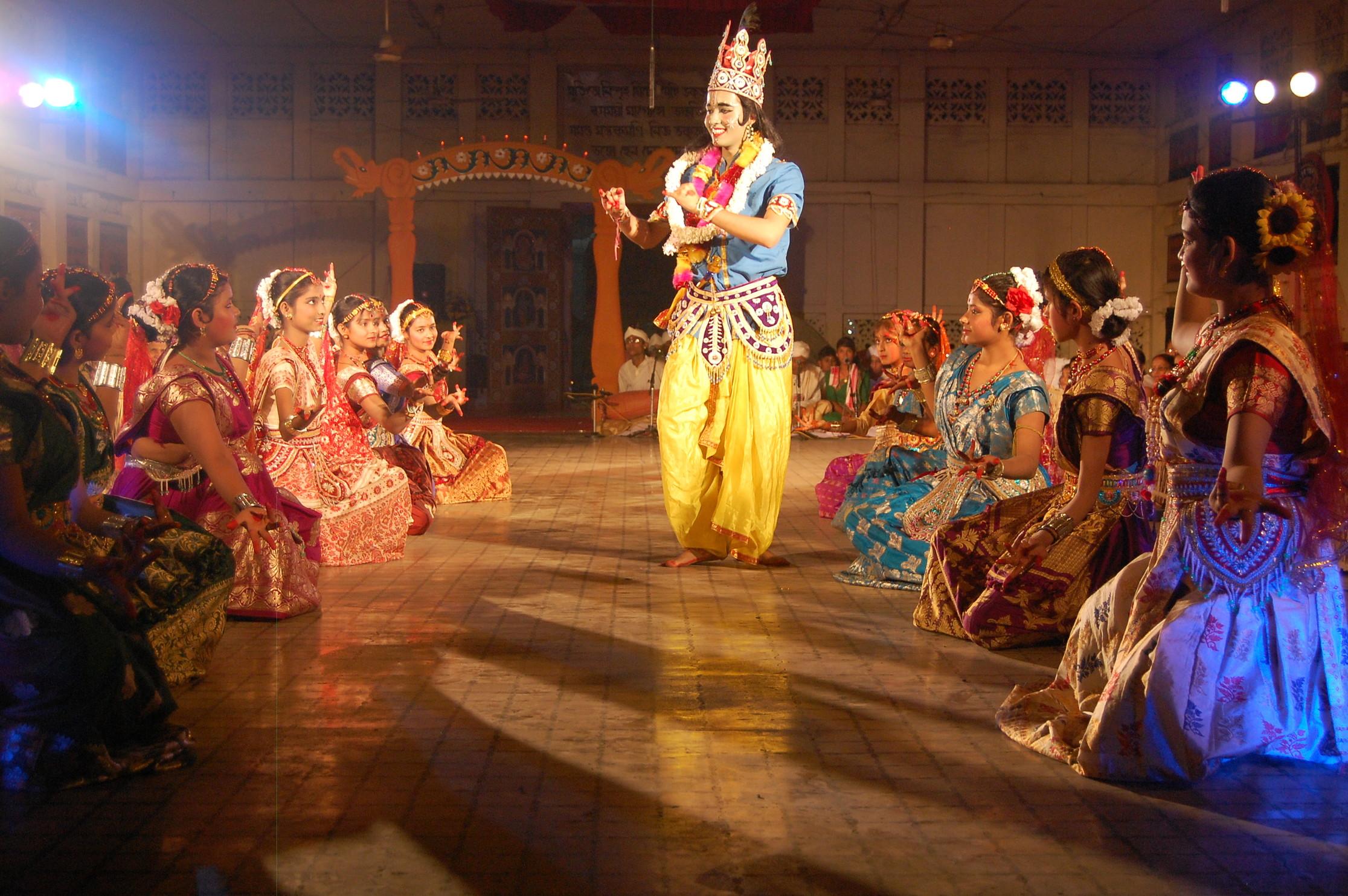
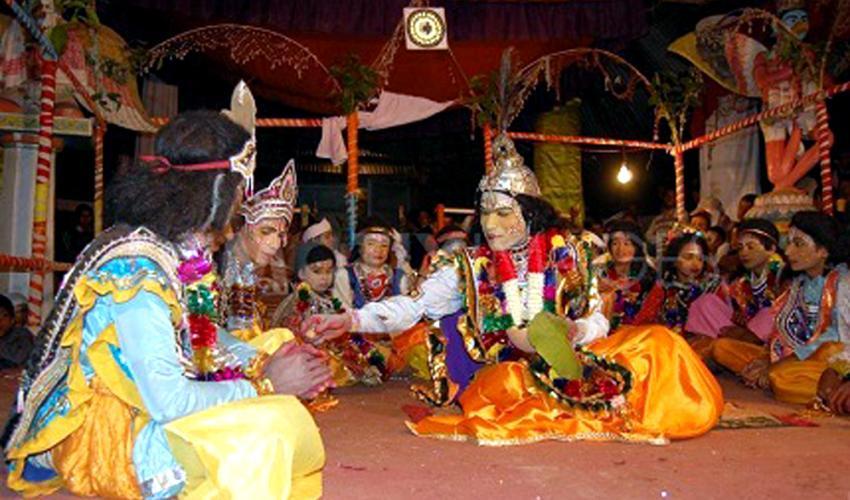
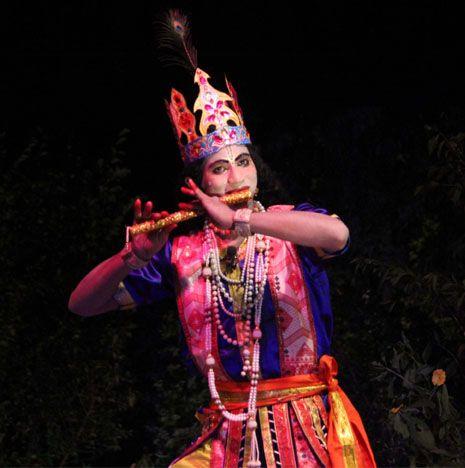
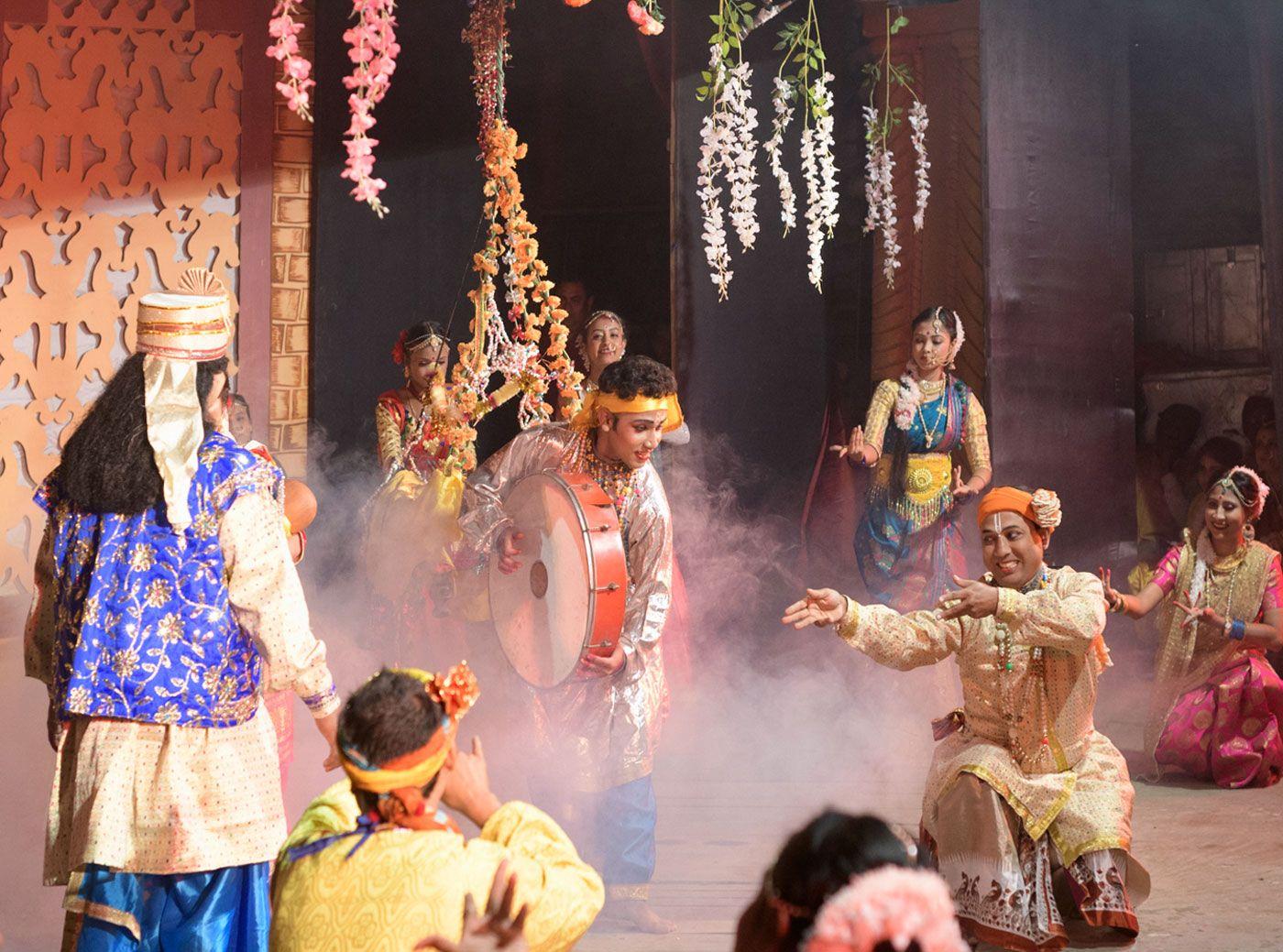

If your trip falls around November, check the dates for Raas Mahotsav.
The festival brings performances, devotional music, theatre and large crowds to Majuli. Bhaona performances can continue late into the night.
This is when Majuli feels especially busy and theatrical.
Accommodation can fill up quickly, though, so don’t leave your hotel or homestay booking until the last minute.
8. Shop for local handloom
Majuli has a strong weaving tradition.
Look for handwoven Mising textiles, gamusas and other locally made fabrics. If you buy directly from artisans or village households, ask about the work that went into the piece.
You might pay a little more than you would at a generic market.
I’d still pay it.
9. Visit during winter for birdwatching
Majuli’s wetlands and surrounding areas attract migratory birds during winter.
If you’re interested in birds, carry binoculars and go out early in the morning. The quieter parts of the island are much better for this than busy tourist areas.
Don’t expect a polished safari-style setup. You’re exploring a river island, not entering a zoo.
That’s part of the fun.
How many days do you need?
1 day
Possible, but rushed.
You’ll spend a fair chunk of the day dealing with ferries and transport, leaving limited time to actually experience Majuli.
2 days
The minimum I’d recommend.
You can visit a few satras, explore villages, eat local food and have some unplanned time.
3 days
My pick.
Three days gives you enough breathing room to explore without turning the island into a checklist.
Where to stay in Majuli
Homestays are a good choice here.
You’ll find accommodation around areas such as Kamalabari, Garamur and nearby villages. Some are basic, while others have comfortable rooms and attached bathrooms.
Pick based on location rather than expecting a luxury hotel experience.
A good homestay can also help arrange scooters, local transport, meals and village visits.
How much does a Majuli trip cost?
Your cost depends heavily on how you travel.
For a budget trip, roughly ₹1,500 to ₹2,500 per person per day can work for accommodation, food and local transport, excluding your journey to Jorhat and back.
A basic breakdown might look like:
| Expense | Approx. cost |
|---|---|
| Homestay | ₹600–₹1,500/night |
| Local meals | ₹100–₹300/meal |
| Scooter rental | ₹400–₹800/day |
| Local transport | Depends on distance |
| Ferry | Varies by service and vehicle |
Treat these as planning numbers rather than fixed rates. Ferry fares, rentals and accommodation prices can change.
What to pack for Majuli
Keep it simple.
- Comfortable walking shoes
- Light cotton clothes
- Sunscreen
- Mosquito repellent
- Power bank
- A small backpack
- Rain protection
- Cash
- Basic medicines
- A reusable water bottle
Carry some cash because card and UPI availability can be inconsistent in rural areas.
And pack light. You’ll be happier on the ferry.
Things to know before visiting
Ferry timings matter. Check the return service before you start exploring for the day.
River conditions can change plans. Weather and water levels can affect transportation.
Don’t rush the satras. Some are active religious institutions, so dress respectfully and follow local rules about photography.
Respect village life. Ask before photographing people, homes or ceremonies.
Carry cash. Don’t assume every small shop or homestay will accept digital payments.
Keep expectations realistic. Majuli is rural. Internet, roads, transport and accommodation can be basic in places.
A simple 2-day Majuli itinerary
Day 1
Morning: Ferry from Nimati Ghat to Majuli
Late morning: Check into your homestay
Afternoon: Auniati Satra and nearby villages
Evening: Brahmaputra sunset
Night: Local dinner and a quiet evening at the homestay
Day 2
Morning: Kamalabari Satra
Late morning: Samaguri Satra and mask-making
Afternoon: Mising village visit and local handloom
Evening: Explore nearby roads by scooter and catch your ferry back, depending on the schedule
If you have a third day, don’t fill it with more attractions.
Ride around. Eat. Talk to people. Sit by the river.
Majuli gets better when you slow down.
Featured Image Credit: Generated/Sourced via Chatgpt.com.
Editorial note: Some articles may use AI-assisted research or drafting. Our editorial process includes human review and editing, and important travel information should be verified with official sources before your trip.
Travel Tips & Responsible Exploration
Good travel planning starts with staying informed. Before your journey, verify important details such as transportation, accommodation, weather, permits, entry requirements, and local guidelines. Respect local communities, cultures, traditions, and the environment, and travel responsibly wherever you go. Suman Rabha shares practical travel guides, local insights, and destination information to help readers explore Northeast India and beyond with greater confidence.